

Blog
Louisiana v. Callais:
What The Supreme Court’s Ruling Means for Voting Rights
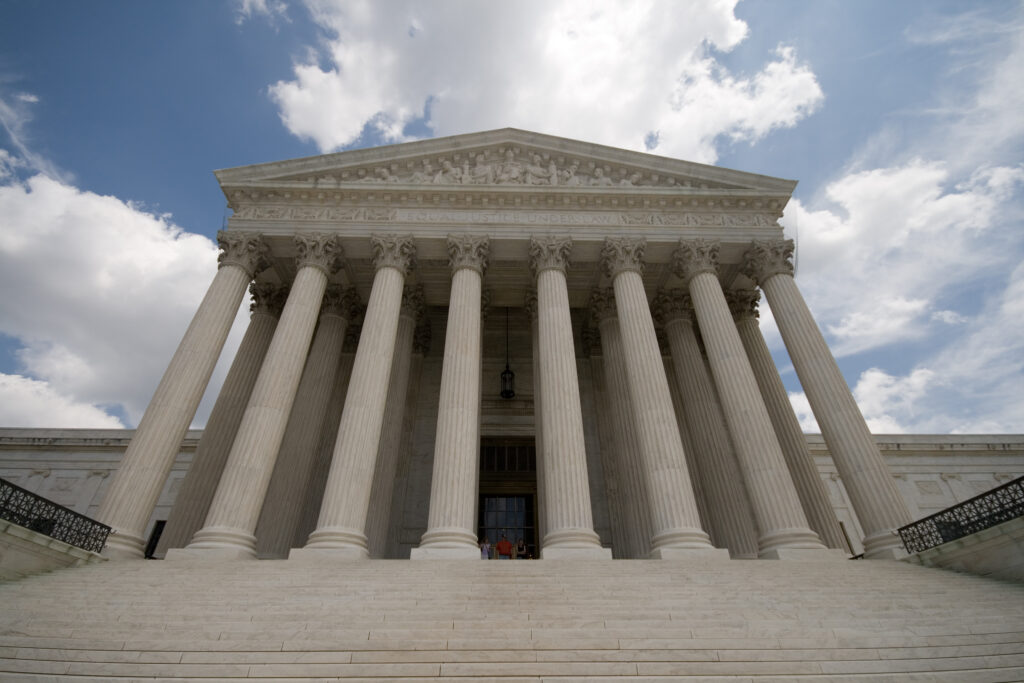
Yesterday, the Supreme Court handed down one of the most consequential voting rights decisions in decades. [1] In a 6-3 ruling in Louisiana v. Callais, the Court’s conservative majority struck down Louisiana’s congressional map, which had been drawn specifically to give Black voters (who make up roughly one-third of Louisiana’s population) fair representation in Congress. [6]
Frankly, they’ve snuffed out Section 2 of the Voting Rights Act of 1964.
The ruling marks a fundamental shift in the constitutional understanding of equality, voting rights, and Congress’ power to enforce the 13th, 14th, and 15th Amendments. For organizations working on the front lines of civic engagement, the decision will fundamentally change your operations, effective immediately. [2]
What Was the Supreme Court’s Louisiana v. Callais Decision?
In 2022, two years after Louisiana redrew its post-census congressional districts, a federal judge found that the map likely violated Section 2 of the Voting Rights Act because it did not include an additional majority-Black district that was required for proportional representation. The state was ordered to redraw, and it did. That remedial map, which gave Black Louisianans the necessary second seat in a six-district congressional delegation, is what the Court struck down today as an unconstitutional racial gerrymander. [3]
While the ruling does not formally overturn Section 2 of the Voting Rights Act, it sharply narrows states’ use of race as a factor when drawing congressional districts. In other words, it completely abandons the original purpose of the provision aiming to protect minority communities.
States that try to remedy proven discrimination by drawing majority-minority districts can now be found to have violated the Constitution for doing so. States that don’t draw those districts remain free to dilute minority voting power without meaningful legal consequence.
As Justice Elena Kagan put it in her dissent, the ruling makes Section 2 “all but a dead letter” and represents the “latest chapter in the majority’s now-completed demolition” of the Voting Rights Act. [6]
The outcome will have nationwide consequences. This ruling has the power to affect how states draw congressional districts and influence the balance of power in Congress by making it easier to dismantle the districts that have tended to favor Democratic candidates. With the 2026 midterm elections approaching and Republicans holding a narrow House majority, the decision arrives at precisely the moment it can do the most structural damage. How convenient! [5]
Did This Supreme Court Ruling Come Out of Nowhere?
No! It would be a mistake to treat today’s ruling as a surprise.
The architecture for it has been under construction for decades. When the Supreme Court gutted the Voting Rights Act’s preclearance requirement in Shelby County v. Holder in 2013, it dismantled the law’s prevention mechanism (the requirement that states with histories of discrimination get federal approval before changing voting rules). Within hours of that decision, multiple states released voting laws that were blatantly suppressing communities based on race.
Louisiana v. Callais completes the second phase of that dastardly plan. By declaring that race-conscious redistricting remedies violate equal protection, the Court has effectively dismantled what remained of the Voting Rights Act’s practical force. The statute remains on the books, but its most powerful application has been stripped away. Shelby County made it easier to suppress votes before they’re cast, and today’s ruling makes it easier to dilute votes after they are. [2]
The dissent emphasized that ignoring the real-world operation of racial discrimination entrenches inequality. Minority communities don’t lose the right to cast a ballot under this ruling, but they do lose the structural guarantee that their ballots will carry meaningful weight. [2]
What Does Louisiana v. Callais Mean for Progressive Organizations?
The NAACP’s response was direct, and is representative of the sentiment shared across the progressive sphere: “This ruling is a major setback for our nation and threatens to erode the hard-won victories we’ve fought, bled, and died for. But the people still can fight back. Our best defense and offense is the ballot box.” In other words, the work of getting people to that ballot box just became more urgent (and more complicated) than ever. [5]
The legal avenues that voting rights advocates have relied on for decades are narrowing. What remains is the work on the ground: registration, turnout, civic education, and the sustained community engagement keeping people connected to the process even when the process keeps failing them.
What Can We Do?
When the legal architecture weakens, civic infrastructure has to compensate with better tools, sharper data, and more coordinated outreach than ever before. That’s what Civitech was founded to do.
Civitech’s proprietary data is the most comprehensive on the market because it includes the voters that standard voter files leave out. That includes the Rising American Electorate: women, young people, and people of color.
In a post-Callais United States, where minority communities face increasingly diluted political representation, knowing exactly where unregistered voters are (and how to best reach them) is imperative. With Civitech’s nationwide voter file, organizations can identify registration gaps in targeted districts and move on them quickly.
On the engagement side, Civitech’s direct mail voter registration and GOTV programs are the most advanced and affordable in the progressive space (we proved it, check it out). With these programs, organizations can run registration and GOTV efforts that meet people where they are, consistently and at scale. For campaigns, organizers, and political leaders managing it all, RunningMate aggregates and visualizes the data needed to allocate resources, identify supporters, and turn a win number into an actionable plan.
The communities most affected by today’s ruling have been systematically deprioritized for generations. Rebuilding their connection to the political process requires year-round infrastructure and trusted, sustained engagement.
If your organization is reassessing its strategy in the wake of Louisiana v. Callais, that’s the kind of proven infrastructure this moment demands. Reach out at [email protected].
References
- Louisiana v. Callais, No. 24-109, 608 U.S. (2026). https://www.supremecourt.gov/opinions/25pdf/24-109_21o3.pdf
- ABC News. (2026, April 29). 5 things to know about the Supreme Court’s landmark decision on the Voting Rights Act. https://abcnews.com/Politics/5-things-supreme-courts-landmark-decision-voting-rights/story?id=131396119
- NAACP Legal Defense Fund. (2026). Louisiana v. Callais. https://www.naacpldf.org/case-issue/louisiana-v-callais/
- NBC News. (2026, April 29). Supreme Court splits 6-3 in striking down Louisiana congressional map. https://www.ms.now/deadline-white-house/deadline-legal-blog/supreme-court-louisiana-redistricting-map-callais
- Newsweek. (2026, April 29). Supreme Court limits Voting Rights Act in Louisiana case, granting win to Republicans. https://www.newsweek.com/supreme-court-louisiana-callais-voting-rights-redistricting-map-11893131
- SCOTUSblog. (2026, April 29). In major Voting Rights Act case, Supreme Court strikes down redistricting map challenged as racial gerrymander. https://www.scotusblog.com/2026/04/in-major-voting-rights-act-case-supreme-court-strikes-down-redistricting-map-challenged-as-racia/